article thumbnail

Plants with thinner leaves are more sensitive to warming temperatures

Thu, Sep 03, 2026

Temperature is important, but not the only factor in determining when plants leaf out in spring or lose their leaves in autumn. Species traits, like leaf size or thickness, also play an important role. To understand whether some plants may be more sensitive to increasing temperatures, researchers gathered data from warming experiments as well as observational data from Nature’s Notebook and a phenology network in China. They found that plants with thinner leaves and higher nutrient concentrations are more sensitive to temperature increases. These plants will typically leaf out earlier and lose their leaves later in warm years. Plants with thicker, longer-lived leaves are less likely to shift their growing seasons in response to warming temperatures. These results identified important patterns that can help refine predictions about how plant communities will respond to future climate change.
WHAT ARE PHENO FORECASTS?

Pheno Forecast maps predict key life cycle stages in invasive and pest species, to improve management efficacy.  For insect pest species, Pheno Forecasts are based on published growing degree day (GDD) thresholds for key points in species life cycles. These key points typically represent life cycle stages when management actions are most effective. These maps are updated daily and available 6 days in the future.

Help us improve these maps! Our Pheno Forecast map products are still in development, and we seek input on their performance in your area. Give your feedback at the bottom of the page.

SIGN UP FOR PHENO FORECAST NOTIFICATIONS!

Sign up to be notified by email approximately two weeks and again six days ahead of key growing degree day thresholds for species of interest at your location


WHAT ARE PHENO FORECASTS?

Pheno Forecast maps predict key life cycle stages in invasive and pest species, to improve management efficacy.  For insect pest species, Pheno Forecasts are based on published growing degree day (GDD) thresholds for key points in species life cycles. These key points typically represent life cycle stages when management actions are most effective. These maps are updated daily and available 6 days in the future.

Help us improve these maps! Our Pheno Forecast map products are still in development, and we seek input on their performance in your area. Give your feedback at the bottom of the page.

SIGN UP FOR PHENO FORECAST NOTIFICATIONS!

Sign up to be notified by email approximately two weeks and again six days ahead of key growing degree day thresholds for species of interest at your location


article thumbnail

Nature’s Notebook data reveal how climate impacts flowering in eastern redbud trees

Sat, Jul 25, 2026

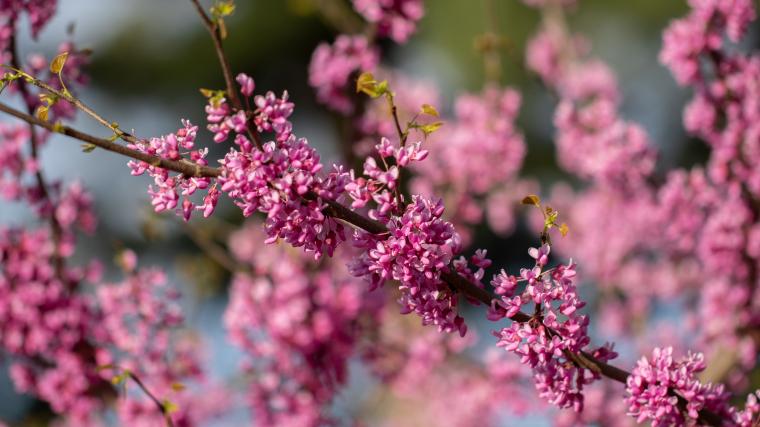
The appearance of bright pink flowers on eastern redbud trees is a reliable indicator that spring has arrived in the eastern U.S. However, the timing varies across the species’ range and not much is understood about the climate conditions that trigger flowering. A team of researchers used Nature’s Notebook observations from more than 150 sites across the eastern U.S. to identify how temperatures and daylength influence flowering in eastern redbuds. They used a novel modeling approach to show that both the amount of cold in winter and warmth in spring are important. However, the relative amount of cold and warmth needed to trigger flowering differed among sites. Trees in the north needed more cold and less heat to flower than trees in the south. Using these results, researchers can make accurate predictions about redbud flowering given recent climate conditions and better understand the potential impacts of climate change.


article thumbnail

Join us at Botany 2026 in Tucson!

Thu, Jul 09, 2026

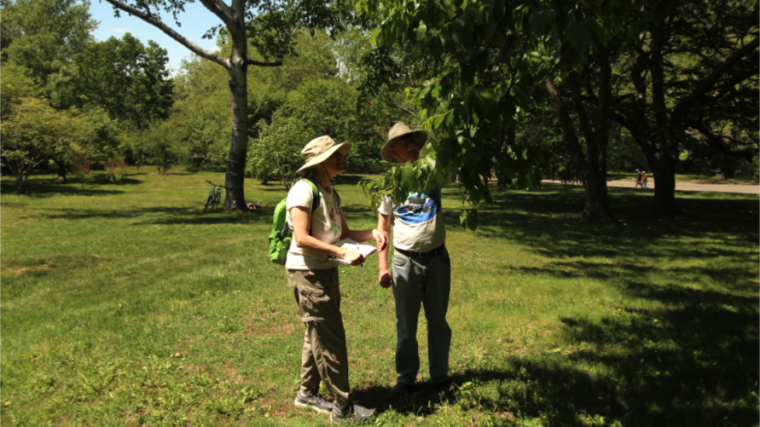
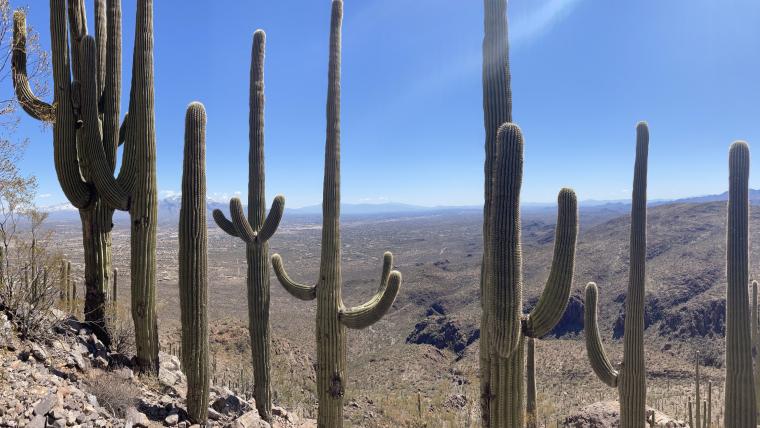
Are you attending the Botany Meeting in Tucson this August 1-5? We'll see you there! Come meet USA-NPN staff and students at our booth and talk to us about our new Nature's Notebook app (due out later this summer), the phenology data we have available, how to implement phenology monitoring with your undergraduate class or at your organization, and more!


article thumbnail

Weather impacts autumn phenology differently in the eastern and western U.S.

Mon, May 04, 2026

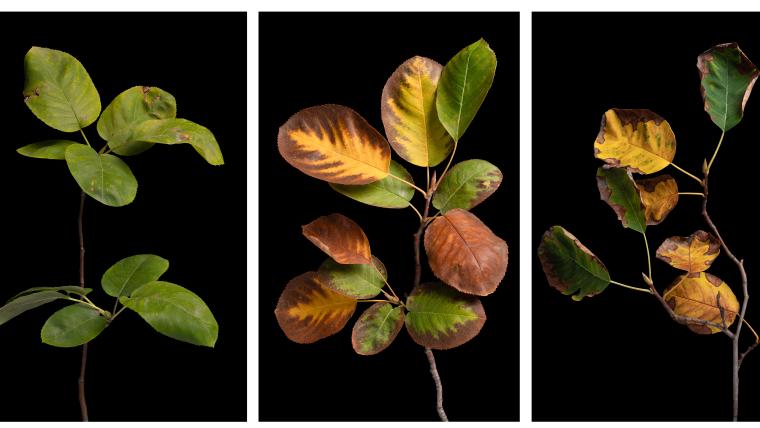
The timing of phenological events in autumn like leaf color and leaf fall have important consequences for nutrient cycling, species interactions, and even tourism. However, there has been less research on autumn phenology than spring phenology and the effects of temperature, precipitation, and day length are not well understood. To fill this gap, researchers used Nature’s Notebook observations of autumn phenology from woody plant species across the U.S. They found strong regional differences. Leaf color in the eastern U.S. was driven primary by summer temperatures, whereas in the western U.S., leaf color change was influenced more strongly by precipitation that occurred more than six months prior. Given these differences, the effects of climate change are likely to be complex. Increased temperatures may extend the growing season for some plants and increased drought may shorten the growing season for others.